


Challenge guide

    Rejection sensitivity and ADHD: what the term means and ways to respond

    Rejection sensitivity describes anticipating or reacting strongly to possible rejection or criticism.

    By ADHD Product Directory · Updated October 30, 2026

    Abstract illustration of two abstract speech shapes with an open gap and a soft protective arch, connection and interpretation without sadness.
    Definitions, research and practical advice

    01 · Definition

    What is rejection sensitivity?

    Rejection sensitivity describes anticipating or reacting strongly to possible rejection or criticism. A delayed reply, unclear feedback or change in tone can feel threatening even before the other person’s meaning is known. Feelings and interpretations can be separated without dismissing either.

    “Rejection sensitive dysphoria” is a popular label, not a standalone formal diagnosis. Evidence about lived experience does not establish a distinct disorder or a proven app treatment.

    02 · Research and evidence

    What does research say about rejection sensitivity?

    These sources address different parts of the topic. The study design and population matter when deciding what a finding can tell you about everyday support.

    The lived experience of rejection sensitivity in ADHD

    2026 · Qualitative study · five undergraduate students

    Findings: Focus groups explored personal experiences of rejection sensitivity, including withdrawal, masking and bodily sensations.

    Limitations: A small qualitative sample can describe experiences, but cannot establish prevalence, a separate diagnosis or treatment efficacy.

    Read the research source →

    Adult ADHD: evidence base, uncertainties and controversies

    2025 · Clinical evidence review · adults

    Findings: This review discusses attention, executive functioning and the varied presentation of adult ADHD. It provides a wider clinical context for difficulties with planning, remembering and directing action.

    Limitations: A clinical review does not establish this directory tag as a separate diagnosis or test the practical steps or products on this page.

    Read the research source →

    03 · Example explanation

    Video: rejection sensitivity explained

    How to Deal with Rejection Sensitivity

    By How to ADHD / Caroline Maguire

    Practical ways to pause and examine interpretations of rejection. The written definition distinguishes the experience from a standalone diagnosis.

    Watch on YouTube

    The episode features Caroline Maguire and links to her book and resources.

    04 · Practical guide

    How to manage rejection sensitivity

    1. 1. Separate observation from interpretation

      Write what actually happened before describing what you think it means.

      Example: Observation: no reply today. Interpretation: they are angry with me.

    2. 2. Allow time before responding

      Use a brief pause or trusted support before sending a message you may regret.

      Example: Draft a response privately, then reread it after a walk.

    3. 3. Ask a clear question

      When appropriate, check the meaning with the person instead of repeatedly guessing.

      Example: “Would you like changes to the draft, or are you still reviewing it?”

    These examples are illustrative. Adjust the steps and timings to your situation.

    When to adjust the approach

    “Rejection sensitive dysphoria” is a popular label, not a standalone formal diagnosis. Evidence about lived experience does not establish a distinct disorder or a proven app treatment.

    Evaluate one situation at a time. If the change adds more effort than it removes, simplify it or ask what is still making the task difficult.

    Other support to consider

    You can explore related approaches without adopting a whole new system. emotional dysregulation brain dump external accountability each address a different part of the problem. Choose the support that matches the difficulty you noticed.

    05 · Choosing a tool

    What to look for in a rejection sensitivity tool

    • Private draft space outside messaging apps
    • Optional reminders to revisit a note
    • No sentiment score presented as proof of another person’s intentions

    Start with what you already have. A tool earns its place when it makes your chosen approach easier to use.


    06 · Directory listings

    Apps and tools for rejection sensitivity

    Current directory listings with this tag, shown A–Z. A tag match is a starting point: check each listing for its features and fit. Paid Featured placement is separate from editorial Our Pick.

    How We Feel logo

    Free emotion check-in app developed with scientists

    How We Feel is a free emotional wellbeing journal that helps you find more precise language for an experience than simply good or bad. Its check-in process starts with how pleasant and energetic a feeling is, then offers emotion words and descriptions to help you choose one that fits. A brief entry can become a pause to notice what is happening, without requiring a long written journal. You can add context to a check-in and look back at your history for recurring patterns. For example, a short note about a busy meeting or a quiet evening may make a later review more meaningful than an emotion label on its own. A manageable starting routine is one check-in at a familiar point in the day, adding detail only when it helps you understand the moment. The app also includes short strategies covering thinking, movement, mindfulness and reaching out to other people. These give the journal a practical next step after naming an emotion. The nonprofit developed How We Feel in collaboration with the Yale Center for Emotional Intelligence, and donations support free access. Privacy depends on the features you choose. The current policy distinguishes using the app without an account, when recorded data stays locally on the device, from account-based use that collects check-ins and related information. Friends sharing, research participation and AI features involve additional choices. Optional AI reflection should be understood as generated assistance, and you can review those settings before entering anything sensitive. How We Feel may suit someone who wants a guided check-in rather than an open-ended diary. Its history can also provide useful details to discuss with a practitioner between appointments. It is a tool for emotional awareness and reflection, not a replacement for care, and there is no requirement to turn every feeling into a score or an improvement project.

    Helps with

    AppleMobile
    Free
    View
    Insight Timer logo

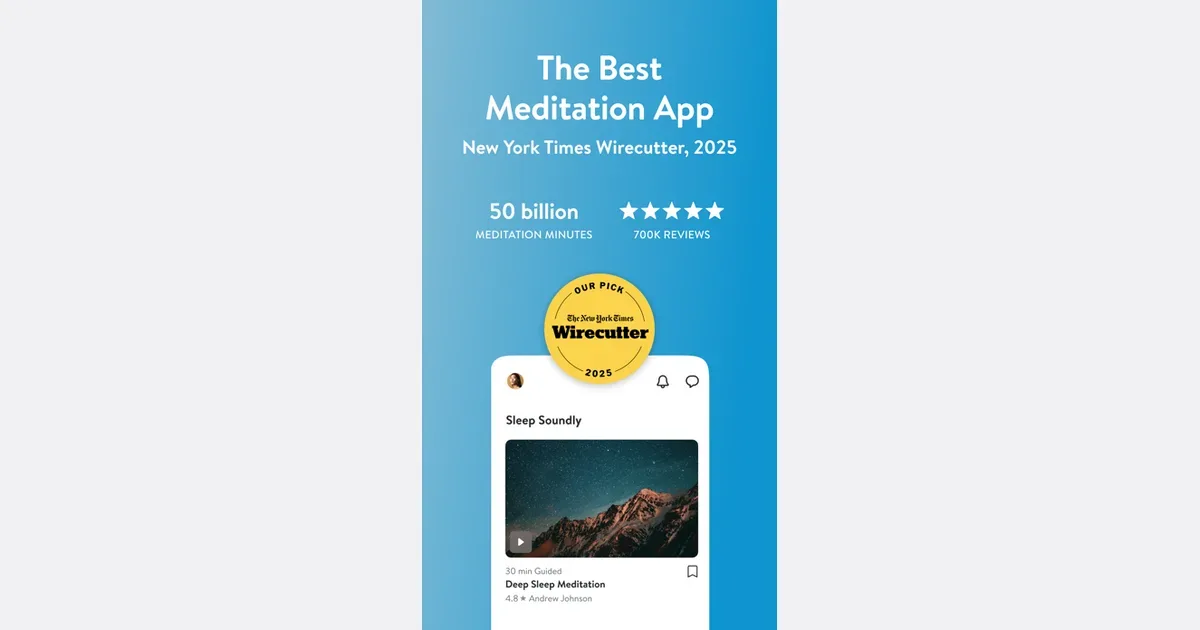
    World's largest free meditation library with 250,000+ sessions

    Insight Timer is a meditation and listening app with a large catalog of guided practices, music, talks and courses from different teachers. Its emphasis on choice makes it possible to explore several approaches rather than follow a single teaching voice throughout. The catalog includes both short sessions and more structured learning material. A practical way to begin is to choose a clear purpose and a manageable duration. You might look for a short guided practice, a familiar teacher or a quiet listening option for the end of the day. Once you find something that suits you, returning to it can be more useful than starting a fresh search every time. A broad library is easier to use when it supports a small repeatable routine. The service includes free listening material and a separate course offering, with paid features and access conditions described in its current plans. Topics and teaching styles vary, so review a session's description before assuming that every recording takes the same approach. Some material is explicitly spiritual, while other sessions use a different frame. Choose content that matches what you want from the practice. Insight Timer may suit people who appreciate variety or want to explore before committing to one method. Its size is also the main trade-off: browsing can take more effort than the short practice you intended to do. Start with one or two reliable sessions and expand gradually. The helpful question is whether a recording fits your preferences and routine, rather than whether you have tried the largest number of teachers or completed every course available.

    Helps with

    BrowserAppleMobile
    Free; USD 9.99/month or USD 59.99/year
    View
    S

    Historical wellbeing app listing; current availability could not be verified

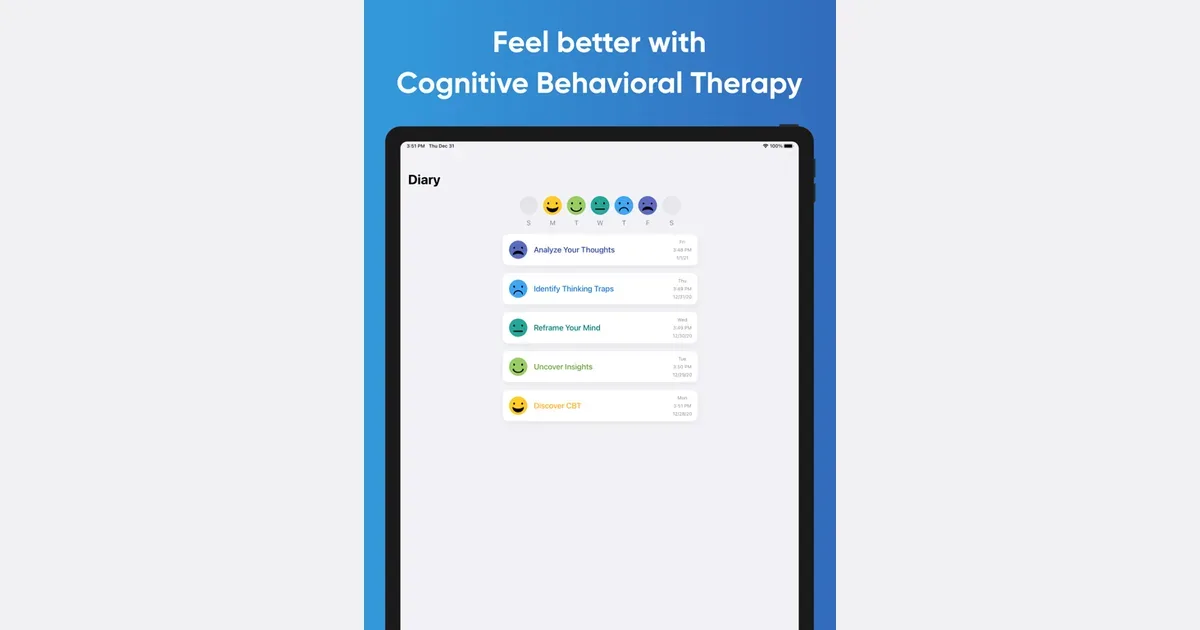
    Availability checked November 5, 2026: the previously listed official website did not resolve, and the former US App Store page returned a 404. Current download access and pricing could not be verified. This does not establish a confirmed retirement date or the status of every regional store. Historical description: Mental health app with evidence-based tools for anxiety, depression, and ADHD-related emotional challenges. Includes mood tracking, guided journaling, CBT exercises, peer support, and access to coaching or therapy. Treat the earlier features and prices as historical information rather than a current offer. Verify access with the publisher before relying on this product.

    Helps with

    AppleMobile
    Pricing unverified
    View
    Woebot logo

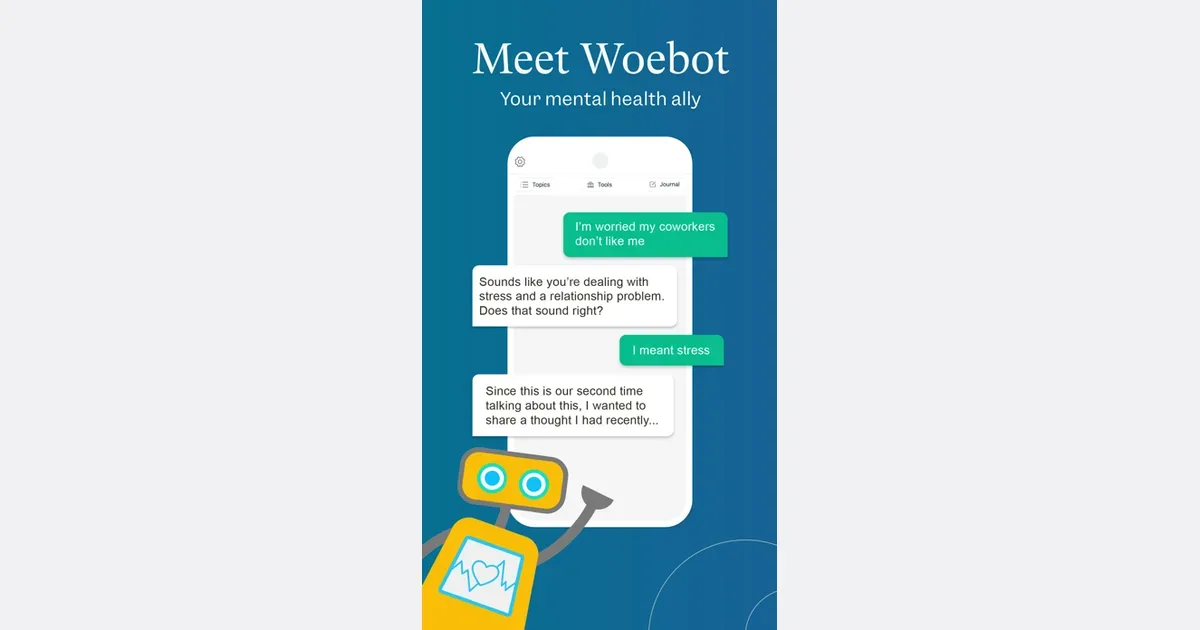
    Retired app: new and existing account access ended June 30, 2025

    Woebot’s app was retired on June 30, 2025. The official FAQ states that new accounts can no longer be created and previous accounts can no longer be accessed. Older videos, reviews and descriptions refer to the former service and should not be treated as instructions for a currently available app. This listing is retained for historical context. Check the official website for the company’s current work; it does not establish that the retired consumer app is available again.

    Helps with

    AppleMobile
    No current offer
    View
    Youper logo

    Service discontinued September 30, 2026; historical listing

    Youper discontinued its services on September 30, 2026, according to the notice on its official website. It was an AI wellbeing chatbot for mood tracking, reflection and journaling. Older tutorials, subscription prices and reviews describe the former service and should not be interpreted as a current signup offer. This listing is retained for historical context. The service is not presented here as an available support option; check the official site for any subsequent company announcement.

    Helps with

    AppleMobile
    No current offer
    View
    See all matching tools →