

Category guide

    Task management apps for ADHD

    Compare task management apps by capture speed, next-step clarity, reminders and setup effort. Find a manageable place for the things you need to do.

    Explore the tools ↓
    A hand places one task card beside checked cards on a lilac path, suggesting one manageable next step.
    On this page

    01 · A starting point

    Find a starting point

    A task list is useful when it gives you somewhere to put a thought and something clear to return to. The right tool might be a short daily list or a more flexible system for projects. Look for one that helps you choose a next step without making the list another project.

    Adding more tasks does not create more time or energy. Even a well-organized list needs regular decisions about what can wait, shrink or go.

    02 · Choosing a tool

    What to look for

    Capture with little effort
    Try adding a task while you are in the middle of something else. Quick entry, a useful inbox or familiar shortcuts can make the difference between capturing it and losing it.
    A clear next step
    Look for ways to break a vague project into small actions and see only the tasks you can work on now.
    Reminders you can act on
    Check whether reminders are easy to adjust or defer. A long stack of overdue tasks may be less helpful than a fresh view of today.
    A system you can maintain
    Try the simplest view before building labels, automations and dashboards. Choose complexity only when it solves a problem you already have.

    03 · Directory listings

    Explore the tools

    A selection of current matching listings, shown A–Z. A category match is a starting point: check each listing for features, pricing and fit. Featured is paid promotion; Our Pick is an editorial selection.

    Airtable logo

    Visual database that works like a spreadsheet but thinks like a database

    Airtable is a configurable workspace for organizing structured information and turning it into useful workflows. Its tables hold records with different fields, so a project can track a status, date, attachment and related information together. It suits work that needs more context than a checklist but does not justify building a custom system from scratch. For example, a content team could keep each article as a record, connect it to a campaign and track who is responsible for the next step. Different views can make the same underlying information useful for different jobs, rather than requiring a separate spreadsheet for each person. Forms provide a way to collect information consistently, and automations can move routine work along after a defined event. Airtable's current platform also includes AI-assisted app building and agents. These expand what a workspace can do, but the foundation remains deciding what information belongs in the system and how people will use it. Before adding automated steps, establish clear field names and a simple process that can be understood by someone else. The main trade-off is setup and ongoing maintenance. A flexible base can become difficult to follow if every exception creates another field, view or automation. Start with one small workflow and a handful of essential properties, then test it with real examples. Airtable may fit project trackers, inventories and shared operational records particularly well. A simpler task app may be easier when all you need is a short list of next actions. Check current plan limits and collaboration arrangements before making it a team's central workspace.

    Helps with

    AppleWindowsMobile
    Free / Team US $20 per user/month billed annually ($24 monthly)
    View
    Akiflow logo

    Calendar-centered task management with keyboard-first workflow

    Akiflow is a task and calendar planner built around bringing responsibilities into one inbox and deciding when to work on them. It combines task capture with time blocking, making it possible to see a piece of work alongside meetings rather than leaving it in a separate list. Integrations can collect actions from other tools so they can be considered in one planning routine. A practical workflow begins by reviewing the inbox and clarifying what each item actually requires. A message that says to prepare a proposal might become several actions, each with a realistic duration. You can then plan those actions in available calendar space or reserve a broader project time slot. Drag-and-drop scheduling and natural-language input provide different ways to make those decisions. Akiflow's wider feature set includes calendar connections, project organization and an AI assistant called Aki. Supported integrations include common calendar, email and communication tools, with the exact arrangement depending on your accounts and setup. Review the permissions and the specific import behavior before connecting every source of work at once. The approach may suit people whose tasks are scattered across several services and who want one deliberate place to plan the day. Its value depends on maintaining that planning habit: importing everything without deciding what belongs on today's schedule can simply create a larger inbox. Begin with one or two integrations, use descriptive action titles and leave space for interruptions. Akiflow can make the relationship between a task and available time clearer, while deciding what to decline, postpone or simplify remains a personal or team responsibility.

    Helps with

    BrowserAppleMobile
    $14.90-34/month
    View
    Amazing Marvin logo

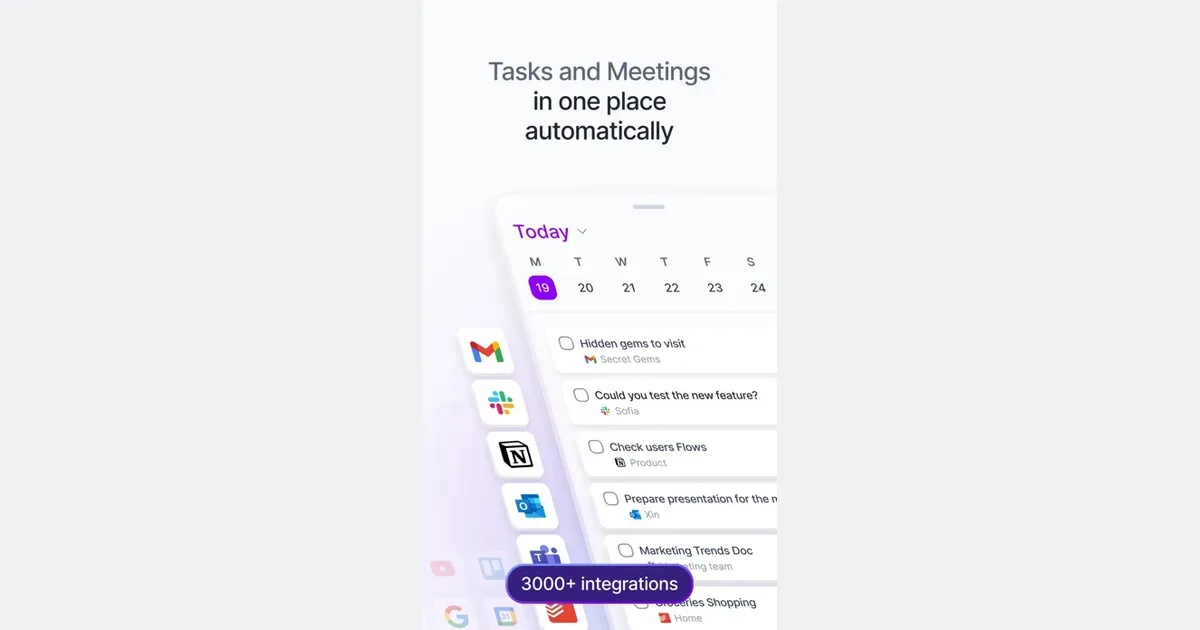
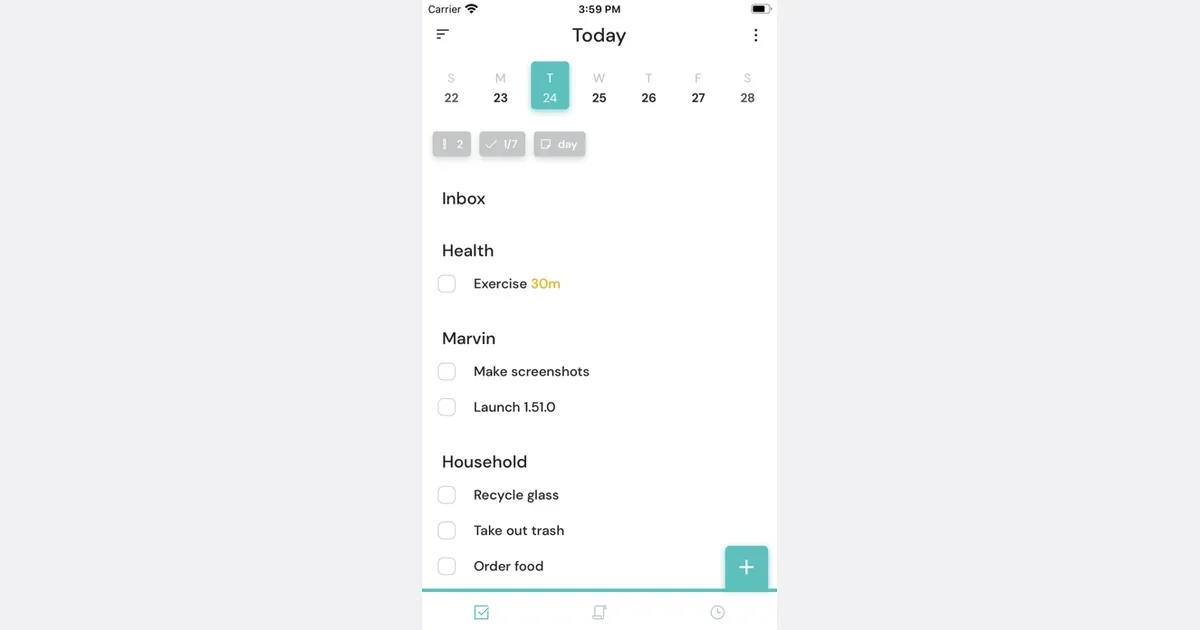
    The most customizable task manager built for ADHD

    Amazing Marvin is a customizable task manager and daily planner for people who want to change how their system works as their needs change. It combines a master task list with projects, categories, recurring tasks, daily planning and optional tools for starting and finishing work. Rather than requiring one productivity method, it lets you enable individual features and leave the rest out of view. A practical starting workflow is to capture everything in the master list, separate projects from individual actions, and choose a small set of tasks for today. Duration estimates and capacity planning help you compare that selection with the time available. Planning a day and setting a deadline are separate decisions: you can intend to work on something today without pretending it is due today. Smart lists and labels provide different ways to surface the same work. Marvin also addresses the moment when a list feels too difficult to approach. Super Focus Mode reduces the display to one task, the Procrastination Wizard helps you examine a sticking point, and task breakdown makes a large item more concrete. Timers, time tracking, habits and rewards are optional additions. Its web, desktop and mobile apps support capturing away from your desk and returning to a larger planning view later. The flexibility is useful if a rigid planner repeatedly stops fitting your life, but it creates setup decisions of its own. Start with one project and a short today list before adding strategies. Review which features you actually use, and disable those that add upkeep. Marvin provides structure and prompts; choosing realistic commitments and returning to the list still require an ongoing habit.

    Helps with

    BrowserAppleMobile
    $12/month / $96/year / $300 lifetime
    View
    Amplenote logo

    Notes and tasks combined with Eisenhower matrix prioritization

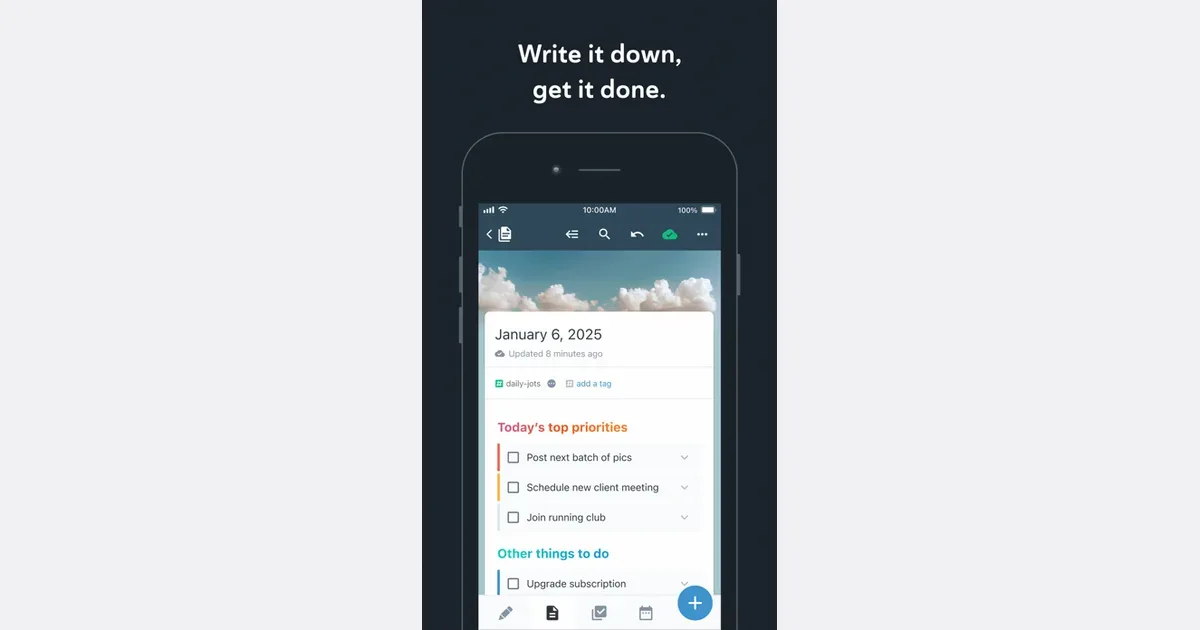
    Amplenote brings notes, tasks and calendar planning into one workspace. It is intended for people whose actions emerge from meeting notes, research, daily thoughts or project ideas, and who would prefer to keep the supporting context beside the work. Its capture, review and planning tools offer a path from a quick thought to a scheduled next step. You can begin by collecting short entries in Jots, then move useful material into longer notes. Tasks can live inside those notes rather than being copied into a separate task manager. Tags, links and search help you find related information again, while the Tasks and Calendar areas provide a more focused view of what needs doing. For example, a meeting note can hold the discussion and its follow-up actions, with selected actions brought into your plan for the week. The current product also includes dashboards for goals and completed work, optional mood tracking, and AI assistance through Ample Agent Pro. These additions extend the core notes-to-action workflow with help organizing material, refining text and identifying possible next actions. Availability depends on the chosen plan and feature, so check the current offering before building a workflow around an advanced capability. Web, desktop and mobile access support capturing and reviewing in different settings. Amplenote may fit someone who loses track of tasks when they become separated from the notes that explain them. The tradeoff is learning how notes, tags, tasks and calendar planning relate to one another. A small project is a better first experiment than importing every archive and designing a complete life system at once. Keep the capture route simple, reserve a regular review time, and assess whether the combined workspace reduces the number of places you need to check.

    Helps with

    BrowserAppleMobile
    Free Personal / $5.84/month Pro / $10/month Unlimited
    View
    Any.do logo

    Free task manager combining to-dos, calendar, and reminders

    Any.do is a task-management app with personal lists and collaborative workspaces. It brings tasks, reminders and calendar context together, while shared boards give teams a place to assign responsibility and track progress. The personal and team offerings serve different needs, so begin with the kind of coordination you actually require. For personal use, a useful setup might have one list for household responsibilities and another for work administration. Capture an item when it occurs to you, then make a separate decision about when it needs attention. A clear task such as booking an appointment is easier to act on than a broad heading such as getting organized. Shared lists can make a recurring grocery shop or household handoff visible to the people involved. The team workspace adds boards, owners, due dates and automation around shared work. Any.do's current offering also includes connections with AI agents, allowing supported assistants to create or update work in the same system. Those capabilities are optional parts of the workflow; the useful foundation is still an agreed place for tasks and a clear understanding of what each status means. Any.do may suit someone who wants a familiar task-list approach that can extend into collaboration. The main trade-off is matching the plan and workspace to the job. A small private list does not need the same structure as a team process. Start with a few lists, keep reminders selective and review unfinished work before adding more features. Check current plan and device support for the specific calendar, sharing and automation options you intend to use.

    Helps with

    BrowserAppleMobile
    Free Personal / Premium subscription; prices vary by offer and platform
    View
    Asana logo

    Flexible project management with multiple viewing options

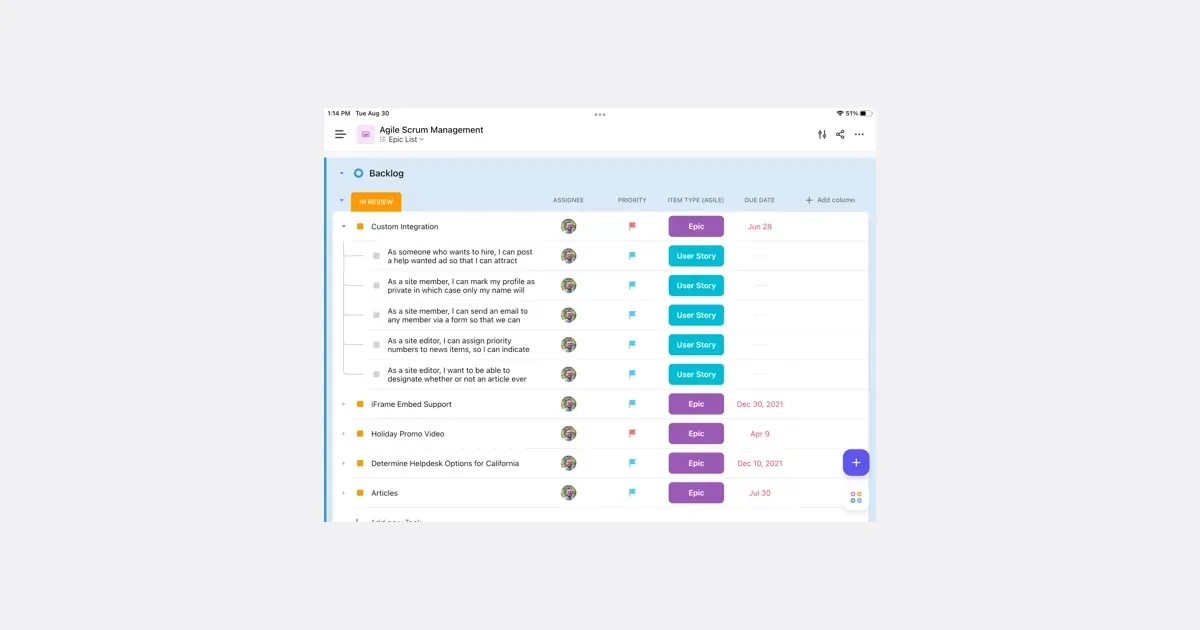
    Asana is a work management platform for organizing projects, tasks and responsibility across a team. It gives work a shared place where people can see what needs to happen, who is handling it and when it is due. Projects can be viewed in several ways, including lists, boards and calendars, with additional planning views and capabilities depending on the plan. A useful starting workflow is to create a project for a specific outcome, divide it into stages and write tasks as concrete next actions. For an event, that could mean booking a venue, reviewing invitations and confirming equipment. Assigning an owner and a date to each action helps distinguish a shared intention from work someone has actually agreed to do. Relevant discussion and updates can stay near the task instead of being scattered through messages. Asana also offers custom fields, forms, rules, reporting and tools for coordinating connected projects. These become more useful when a team has a repeatable process and needs visibility beyond one person's list. Its growing AI features are another part of the offering, so review current availability rather than assuming every capability is included in a basic account. The important consideration is how much coordination your work really needs. Extra fields, notifications and workflows can create administrative effort if nobody agrees how to use them. Begin with a clear project structure and a small set of conventions, then add detail when it answers a real question. Asana may suit collaborative work with handoffs and deadlines; a lightweight personal checklist can be a better fit for a small collection of private errands.

    Helps with

    BrowserAppleMobile
    Free / Starter US $10.99 per user/month billed annually ($13.49 monthly)
    View
    Basecamp logo

    Simple team project management with everything in one place

    Basecamp is a project workspace that brings team tasks, discussions, files and schedules together. Each project has its own page with the tools needed for that piece of work. The aim is to keep context near the project rather than distribute it across an inbox, a chat room and several unrelated documents. A practical setup might use a message board for the project brief, a to-do list for actions and a calendar for important dates. An announcement can remain visible with its replies underneath, making it easier for someone joining later to understand a decision. Tasks can have owners and due dates, while files and reference material stay with the work they support. Basecamp also offers chat, automatic check-ins and Card Tables for work that moves through stages. Automatic check-ins can collect recurring updates without arranging another meeting, while Card Tables provide a board-like view for suitable workflows. The useful choice is which tools a particular project needs; activating everything can create additional places for the same information to accumulate. Basecamp may fit teams or client projects that want a shared home for communication as well as task tracking. Its approach works best when people agree where decisions and requests belong. If important instructions continue to arrive elsewhere without being captured, the project page will not tell the whole story. Begin with a clear brief, a small set of active lists and a convention for recording decisions. It is a coordination tool, while specialist planning or reporting needs may still require checking whether its current capabilities fit the way your team delivers work.

    Helps with

    AppleWindowsMobile
    $15/user/mo or $299/mo flat
    View
    Brain in Hand logo

    Personalized 24/7 digital support for ADHD and autism

    UK-based digital support app providing 1:1 coaching and 24/7 on-demand human support via text or phone. Features daily planning tools, mood tracking, personalized routines, and coping strategies. Available through self-funding or local authority/health system funding in some UK areas.

    Helps with

    AppleMobileBrowser
    Monthly rolling license (varies by region)
    View
    Capacities logo

    Object-based notes that organize naturally for ADHD brains

    Capacities is a personal knowledge app that organizes notes around the things you think about: people, books, projects, meetings and ideas. Each item is an object with its own content and properties, connected to other objects through links. A daily note gives you somewhere to capture thoughts before deciding how much structure they need. For example, you could write meeting notes in your daily workspace, link the people involved, and connect the meeting to a project. The person's page then becomes a way back to related conversations, while the project brings together its supporting material. Backlinks and network views help you follow those relationships without maintaining a separate folder path for every note. Tags can cut across object types when several topics belong together. Custom object types let you decide which details matter. A book might have an author and reading status; a project might have dates, links and a completion status. Templates provide a repeatable starting point, and table, list, gallery and card views offer different ways to browse the same material. Capacities Pro also includes contextual task management, with tasks linked to objects and collected into an inbox, Today and scheduled views. Capacities may suit researchers, students and independent professionals who want connected reference material with a visual structure. Desktop, web and mobile apps support access across devices, although it is worth trying your actual capture and editing routine on each device. Start with a few useful object types and one real project: designing an elaborate taxonomy can create more decisions than it removes. If your main need is a short reminder list, test whether the knowledge-management layer adds enough value for you.

    Helps with

    BrowserAppleWindows
    Free / $9.99/month Pro / $12.49/month Believer
    View
    ClickUp logo

    All-in-one project management with views for every brain type

    ClickUp is a work management workspace that brings tasks, documents, conversations and planning tools together. It is designed to let a team organize several kinds of work in one system rather than move between a separate task app, notes tool and reporting space. That breadth makes it adaptable, but it also gives you more choices to configure. A practical first setup might use one space for a team, a list for a current project and tasks for the next actions. A task can hold the context needed to complete the work, while documents can explain a process or collect a longer brief. Different views and statuses can represent how the team works, making the same project easier to scan from more than one perspective. ClickUp's feature set includes time tracking, calendars, dashboards, automations and whiteboards, as well as AI features that work with workspace information. The availability and usage allowances of individual features vary by plan and add-on, so it is worth checking the current feature comparison before designing a workflow around them. A long feature list does not mean you need to activate everything. For people who benefit from connecting instructions and next steps, keeping those items together may reduce the effort of finding context. The trade-off is the work of maintaining the system. Too many custom statuses, nested locations or notification rules can make an otherwise small project hard to navigate. Start with one real workflow and agree what each status means. ClickUp is most useful when its range replaces genuine fragmentation; it may feel heavy when a straightforward list and a shared document would cover the same need.

    Helps with

    AppleWindowsMobile
    Free / Unlimited US $7 per user/month billed annually
    View
    See all matching tools and filters →

    04 · Practical approaches

    Try an approach

    A tool can support an approach. These guides offer practical ways to try one in your everyday life.