Take the Quiz

Official product demo
Official demo · Provided by the owner
Watch on YouTube
Calendar / Scheduling
Chunk is a time blocking app for Mac that lets you plan your day in time blocks, synced both ways with Apple Calendar, Google Calendar and Outlook.
Chunk is a time blocking app for Mac that lets you plan your day in time blocks, synced both ways with Apple Calendar, Google Calendar and Outlook, for a one-time $39.99 with no subscription.
Managed by developer
Chunk is a time blocking app for Mac that lets you plan your day in time blocks, synced both ways with Apple Calendar, Google Calendar and Outlook, for a one-time $39.99 with no subscription.
Keep your task list and your calendar side by side, then drag a task onto a day or week timeline to turn it into a block. Queue and fit places several tasks into the free gaps around your meetings in one go, and templates rebuild a normal weekday in one click. You decide where the day goes; nothing is scheduled without you.
While you work, a live countdown shows how long is left on the current block, and alerts, desktop widgets and a floating timer keep you on plan, also in fullscreen apps. Apple Reminders syncs both ways, and quick capture adds a task from any app. Recurring tasks can be skipped, paused or rescheduled, and Markdown notes, checklists, iCloud sync across your Macs and 32 languages are included.
Pricing: 7-day free trial, no card required. Lifetime License $39.99 one-time for 2 Macs; Family Package $79.99 one-time for up to 6 Macs. Every future update included. Mac only (macOS 12 or later).
People who plan their day on a Mac and want to see it: professionals, freelancers, students, and people with ADHD who find a visible, time-blocked day easier to follow.
You plan the day yourself by dragging tasks onto your calendar, with a live countdown for the current block. Two-way calendar sync, and a one-time price with no subscription.
Your tasks and plans are stored on your Mac. Optional sync between your own Macs goes through your iCloud account. Calendar sync connects directly to Apple, Google or Outlook.
Screenshot 1 of 5
Flat Price · $39.99 one-time (2 Macs), Family $79.99 one-time (6 Macs), 7-day free trial, no card required
Pricing has not been verified by our editors.
Check current pricing on Chunk’s websiteOfficial demo · Provided by the owner
Watch on YouTube
Calendar-centered task management with keyboard-first workflow
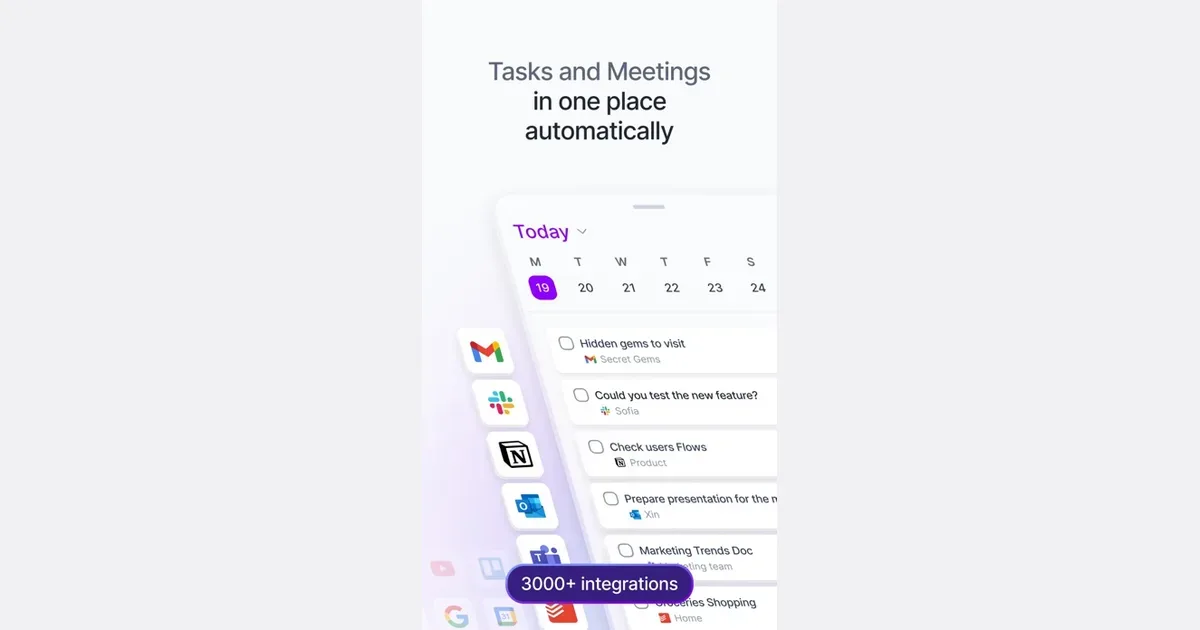
Akiflow is a task and calendar planner built around bringing responsibilities into one inbox and deciding when to work on them. It combines task capture with time blocking, making it possible to see a piece of work alongside meetings rather than leaving it in a separate list. Integrations can collect actions from other tools so they can be considered in one planning routine. A practical workflow begins by reviewing the inbox and clarifying what each item actually requires. A message that says to prepare a proposal might become several actions, each with a realistic duration. You can then plan those actions in available calendar space or reserve a broader project time slot. Drag-and-drop scheduling and natural-language input provide different ways to make those decisions. Akiflow's wider feature set includes calendar connections, project organization and an AI assistant called Aki. Supported integrations include common calendar, email and communication tools, with the exact arrangement depending on your accounts and setup. Review the permissions and the specific import behavior before connecting every source of work at once. The approach may suit people whose tasks are scattered across several services and who want one deliberate place to plan the day. Its value depends on maintaining that planning habit: importing everything without deciding what belongs on today's schedule can simply create a larger inbox. Begin with one or two integrations, use descriptive action titles and leave space for interruptions. Akiflow can make the relationship between a task and available time clearer, while deciding what to decline, postpone or simplify remains a personal or team responsibility.
Helps with
Suggested by Chunk’s team · not an editorial recommendation

Guided daily planning with realistic workload warnings
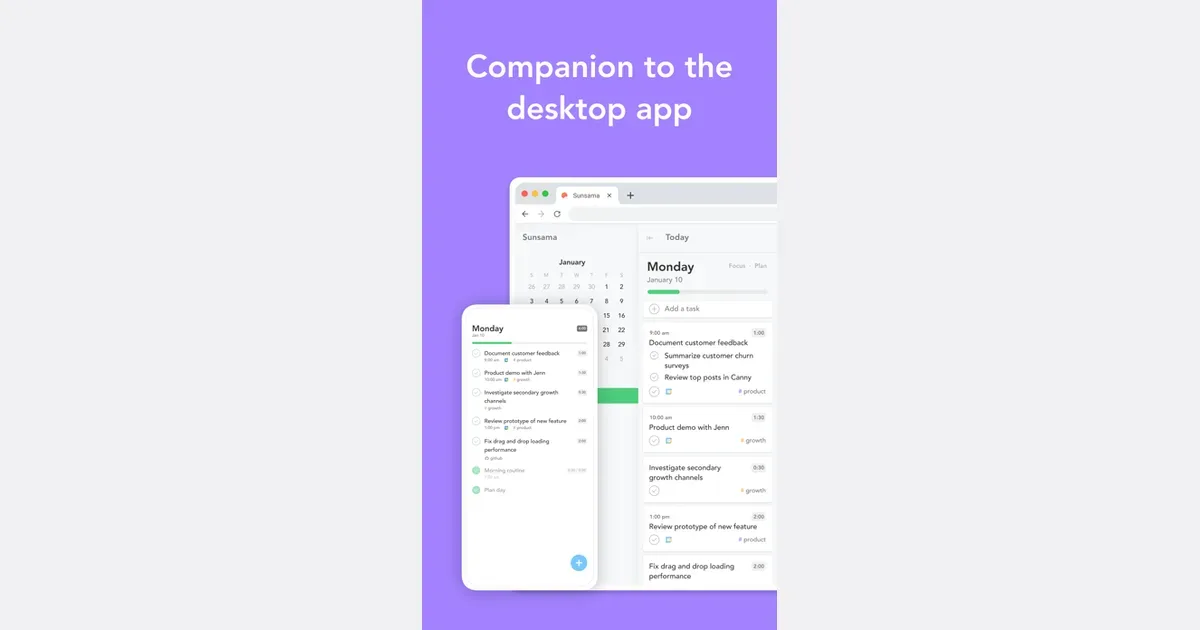
Sunsama is a daily planning app that connects tasks with the time available in your calendar. It is built around deliberately choosing a realistic day's work rather than treating the entire backlog as today's to-do list. People can bring responsibilities from other work tools into a single planning view while retaining the context of meetings and existing commitments. A practical morning routine is to review the tasks that could matter today, select the ones you can reasonably address and reserve time for them. You might pull an action from a project board, turn an email into a follow-up and place both around scheduled calls. Timeboxing makes the cost of those choices visible: if the calendar is already full, something needs to move rather than simply becoming another overdue item. Sunsama supports connections with project-management tools, calendars and communication services. Its product emphasizes planning, focused work and reviewing progress, with a paid subscription rather than a permanent free plan. Check the current integrations and access requirements, especially before connecting a work account that is subject to your organization's policies. The approach may suit people who already know their responsibilities but struggle to turn them into a manageable day. It asks for an active planning habit, so the planning session itself needs to remain proportionate. Start with a few meaningful tasks and allow some unscheduled space. Sunsama is most useful when it helps you make honest choices about capacity; it cannot make an impossible workload fit simply by arranging it more neatly on a timeline.
Helps with
Suggested by Chunk’s team · not an editorial recommendation

AI calendar that automatically schedules tasks and meetings
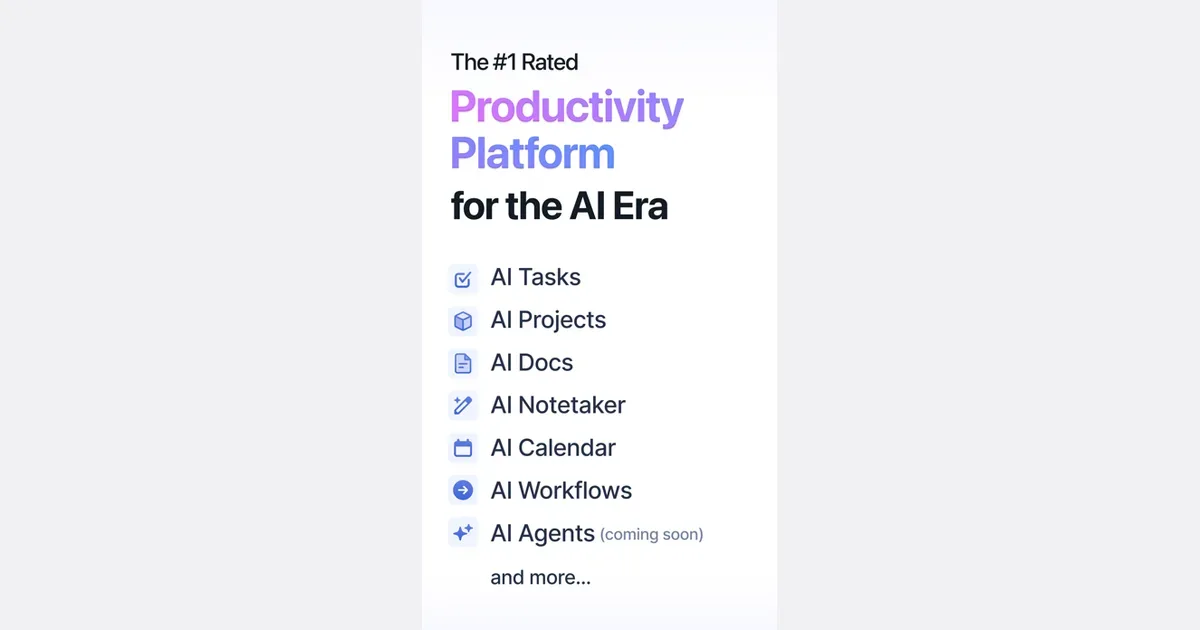
Motion is a work-planning platform that uses task information and calendar availability to build and adjust a schedule. Instead of keeping a separate task backlog and manually placing every item into a calendar, you provide details such as deadlines, duration, priority and dependencies. The system uses those inputs to propose when the work should happen. A practical first project could contain a few clearly defined actions for an upcoming deliverable. Estimate how long each will take and enter the real deadline, then inspect the resulting plan. If a new meeting or higher-priority request changes the day, Motion can revise the schedule rather than requiring every block to be moved by hand. The value depends on whether the task information and calendar boundaries reflect your actual working conditions. Motion's broader offering includes projects, meeting-related tools, documents and AI-assisted workflows. Team capabilities extend planning across responsibilities and handoffs. These are useful distinctions when comparing plans: a person looking for help placing individual tasks in a calendar may not need the same product breadth as a team coordinating delivery. The central trade-off is giving an automated planner enough reliable information. Unrealistic duration estimates or an overloaded backlog can produce a schedule that looks precise but is still difficult to follow. Begin with a small set of work, review the proposed arrangement and leave room for interruptions and breaks. Motion may suit people who repeatedly postpone deciding when to do a task. It is less appealing if you prefer a loosely structured day or do not want a system continuously rearranging the plan.
Helps with
Suggested by Chunk’s team · not an editorial recommendation

Visual planner for neurodivergent routines and time management
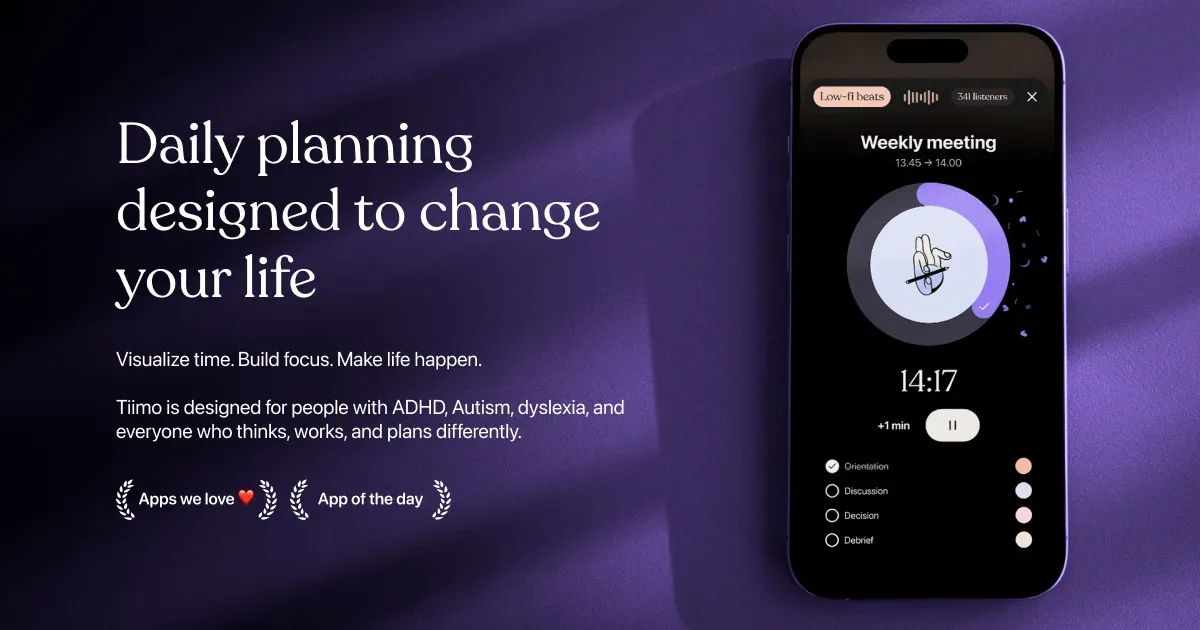
Tiimo is a visual daily planner designed around neurodivergent routines, task transitions and making time easier to see. It combines a to-do list, a visual schedule, a focus timer and optional AI planning. Colors, icons and other display choices help distinguish activities, while widgets keep the next part of the day accessible without repeatedly opening the full planner. You can begin with a brain dump of things you need to do, then give important activities a place in the day. Add a short checklist to an activity such as getting ready or doing laundry, estimate its duration, and use the visual timer while working through it. Calendar import brings existing commitments into the planning process, helping you avoid treating every hour as available task time. The AI co-planner accepts typed or spoken input and can suggest smaller steps, time estimates and a schedule. Treat those suggestions as a draft: adjust them to your energy, travel time and actual commitments. Tiimo’s current documentation lists Apple devices, Android and a web planner. Feature access varies by platform and subscription; the free mobile offering is more limited, while web access requires an active trial or subscription. Tiimo may be especially useful if a conventional list leaves you unsure what to do now, how long to stay with it, or what comes next. A visible sequence can make a routine easier to revisit without holding every step in memory. It still takes time to find the right amount of structure. Start with a familiar morning or evening routine, test notification and widget behavior on your own device, and leave room for interruptions. A schedule works best as something you can revise, rather than a measure of whether you have had a successful day.
Helps with
Suggested by Chunk’s team · not an editorial recommendation